Longtime readers of this journal know that I frequently write about roving, the docent activity in which I just roam around Tohono Chul Park, interact with visitors, and see what's what. Every rove is different, and there is always something beautiful and/or interesting to see.
Here are some sights I encountered on yesterday's rove, on a morning when it was already nearly ninety degrees by 8 AM and expected to go to the mid 90's or higher by 10, when my shift ended, and 103 or so by afternoon. It was also the 25th straight day of temperatures 100 degrees or higher.
 This gorgeous flower is Cereus Grandicostatus, a probable native of South America.
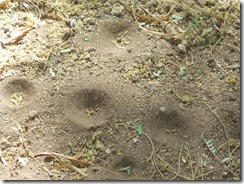
These depressions in the sand are antlion pits, created by the larval form of the antlion, an insect that preys on ants and other very small insects. The sand in the pit is placed at such an angle that a small creature will plummet through the hole at the bottom, where the voracious larva awaits. For more info on this fascinating duet of death, click here.
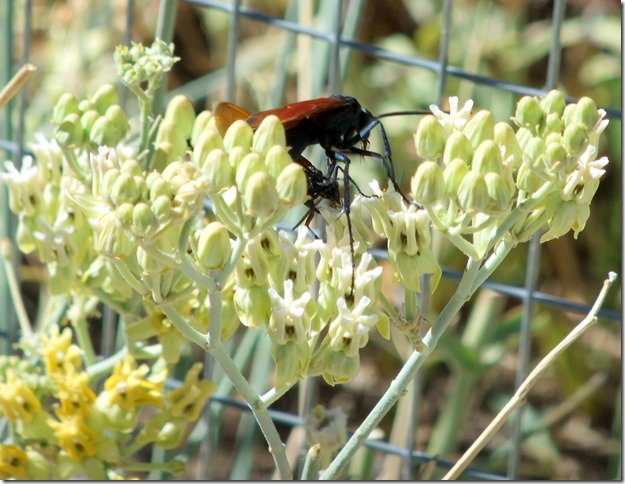 Two tarantula hawks seemed to be mating on this desert milkweed blossom. Tarantula hawks, which are specialized wasps, prey on tarantulas and other large spiders, and are very common as the monsoon approaches (which is when tarantulas leave their burrows to seek mates).
 Pink Rain Lily, from Southern Mexico
 Sonoran Spider Lilies. Note the orange anthers on these flowers. (I do not know what color the quethtions are.)
No Rove would be complete for me without a new bird’s nest. This is another Bell’s Vireo nest. Myy fellow docents and I watched as both parents fed their chicks. The nest appeared to have notepaper attached as part of the design.


![SandhillCrowd4Garrwald[2]](https://blogger.googleusercontent.com/img/b/R29vZ2xl/AVvXsEjTmjLlGax7b_psqrTebXksYl1zt1K_wlbVYGPri7lh2r84DUTsiJB10M8yvfbr5rvQlfeMOAHfEU0aD4yXOpTmXSmRC0Dqxh0tCpwfXDtXmt4rHdK5w8rc812Xe2EZVvQyhyphenhyphenDYXA/s1600-h/SandhillCrowd4Garrwald%25255B2%25255D%25255B3%25255D.jpg "SandhillCrowd4Garrwald[2]")


